
News

New Leadership at Manitoba Aerospace
Manitoba Aerospace has announced the appointment of Beverlie Stuart as its new Chief Executive Officer, effective July 6, 2026. Bev brings extensive experience in organizational leadership,...
EnviroTrec Stories
New Leadership at Manitoba Aerospace
Manitoba Aerospace has announced the appointment of Beverlie Stuart as its new Chief Executive Officer, effective July 6, 2026. Bev brings extensive experience in organizational leadership,...

Two Emerging Exciting Green Projects in North Dakota and Minnesota
Sustainable Aviation Fuel is essential to the future of the aerospace industry, as it offers the opportunity to continue to build that industry with relatively few changes required in their entire regime – which one would have to agree is indeed very complex. The key difference here is that SAF fuel generally no longer comes from the petroleum industry but rather from the biomass industry.
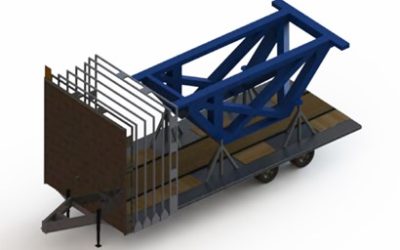
CAPSTONE Project 2023: Prepare Manufacture-Ready Transport and Storage Cart
The team employed analytical and numerical methodologies to assess the design against the customer-defined requirements, including static and fatigue studies of the structure and its associated components. The team also provided procurement specifications for the off-the-shelf components, as well as detailed manufacturing specifications for those parts requiring manufacturing.

A Sustainable Aviation Fuel Project Making Progress in Manitoba
Portage la Prairie finds itself in a nexus of agricultural opportunities. The aerospace industry is trying hard to manage carbon emissions with a growing passenger demand. Part of that industry’s mitigation efforts are focused on better gas turbine engines or improved aircraft designs. These improvements, however, only reduce carbon emissions to a limited extent. A more holistic and long-term view needs to be taken.
Industry Stories
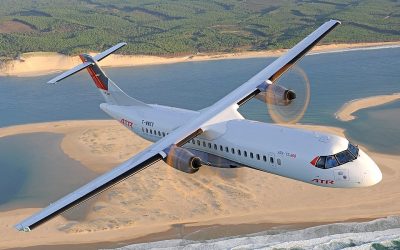
Ready for Takeoff: Hydrogen Fuel Cell-Powered Regional Aircraft by 2030
Aviation’s path to decarbonization is accelerating, and one of the most promising near-term opportunities lies in retrofitting existing regional aircraft with hydrogen fuel cell systems. The ATR 72—a 72-seat turboprop already used widely for short-haul routes—is emerging as a key candidate for early adoption. This story explores the technical, economic, and regulatory dimensions of converting turboprops from fossil fuels to zero-emission hydrogen power. Despite a recent partner setback, project leaders remain committed, pointing to a future where quiet, clean regional flight becomes a commercial reality before 2030.
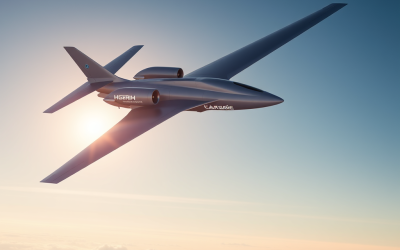
Liquid Hydrogen for Flight: The Dawn of Zero-Emission Aviation
The aviation industry stands at the cusp of a transformative shift as liquid hydrogen emerges as a leading contender in the race toward decarbonized flight. Once the realm of concept studies and laboratory experiments, liquid hydrogen-powered aviation is now advancing rapidly, driven by a convergence of technological breakthroughs, strategic partnerships, and growing regulatory and societal pressure to achieve net-zero emissions by 2050.

Understanding Elastomer Compatibility with Sustainable Aviation Fuels
As the aviation industry intensifies its push toward decarbonization, sustainable aviation fuels (SAFs) have emerged as a vital pathway. These fuels promise up to 80% lifecycle CO2 emissions reductions over conventional Jet A fuel. However, SAFs differ significantly in chemical composition, particularly in their lack of aromatic compounds—an absence that raises critical compatibility questions for existing aircraft fuel systems, specifically for elastomeric seals such as O-rings.
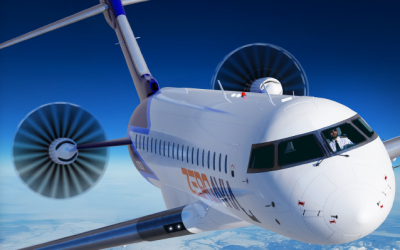
Net Zero Aviation: SAF and Hydrogen Innovations Ahead
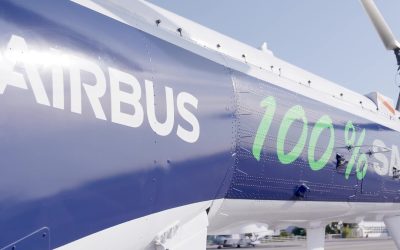
Fully formulated SAF, in contrast, mimics conventional aviation fuel in both composition and performance. It includes aromatics and all necessary hydrocarbons, making it a true drop-in fuel without requiring any modifications to aircraft. ASTM is currently developing standards to allow aircraft to operate on 100% fully formulated SAF, with completion expected by 2030.
Blazing a Sustainable Trail in Aviation: Introducing SAF
The aviation industry stands at the forefront of addressing climate change, striving to meet ambitious carbon neutrality goals by 2050. A critical element in this transformation is the adoption of Sustainable Aviation Fuel (SAF), a cleaner alternative to conventional jet fuel. Over the years, flight and ground tests using both blended and unblended SAF have demonstrated its potential to reshape aviation’s environmental footprint.
Two Emerging Exciting Green Projects in North Dakota and Minnesota
Sustainable Aviation Fuel is essential to the future of the aerospace industry, as it offers the opportunity to continue to build that industry with relatively few changes required in their entire regime – which one would have to agree is indeed very complex. The key difference here is that SAF fuel generally no longer comes from the petroleum industry but rather from the biomass industry.
SAF and Hydrogen Fuel Applications in Aerospace – Part 2
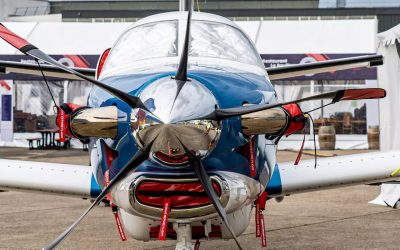
Airbus aims to bring to market the world’s first hydrogen-powered commercial aircraft by 2035. To achieve this, they have proposed the ZEROe project, which will explore a variety of configurations and technologies and prepare the ecosystem that will produce and supply the needed hydrogen. Airbus’ ZEROe program will use four original concepts.

SAF and Hydrogen Fuel Cell Applications in Aerospace – Part 1
ZeroAvia’s fuel cell power generation system technology will be used to demonstrate the concept of using a fuel cell variant in an amphibious flying boat design.
They have selected the PHA-ZE 100 composite amphibious aircraft to demo this project.

IATA Technology Roadmap 2023, Grist for the Mill, Part-6
The price points for the BWB demonstrators are higher, while revenues are not yet evident. Two projects are part of this story. The first is the US government’s support for a demonstrator project for the Blended Wing Body. The second project is the EcoJet Business Jet, being proposed by Bombardier.