
Farnborough 2026 hosts an airshow amidst a world of chaos
The entire world came together this summer at Farnborough to see an airshow amid what can only be called a world of chaos!
Several wars are affecting many regions and having global ripple effects. Even countries not directly involved are feeling the effects, including disrupted trade patterns. As a result, these upheavals are plunging global markets into turmoil.
The ongoing international conflicts seem to remain ceaseless and substantial; trade patterns are shifting, prompting many governments to impose new tariffs or even counter-tariffs. We thought post-COVID adjustments and corrections would have stabilized by now, and that our progress would have moved past the difficulties those events imposed. That no longer seems to be the case. An echo from the past haunts us as Dorothy declares, “Toto, we’re not in Kansas anymore!” Indeed we are not.
Despite these very serious global circumstances, civilian aviation continues to move forward on the IATA Net Zero Roadmap. Experts expect passenger growth to be about 2-4% in 2026. Furthermore, analysts forecast global passenger traffic at 10.2 billion this year. These markets are enduring and growing despite the surrounding circumstances.
Swap-outs of line Aircraft
In the aviation sphere, a significant development is the Airbus A350-900 replacing the Airbus A340-600 in the aviation technology suite. This event reflects phasing out a relatively fuel-inefficient 4-engined aircraft in favour of a more fuel-efficient twin-engined aircraft.
Figure 1: Airbus A350-900, twin-engined with better performance

Elsewhere, Boeing 737-800 and Airbus A320ceo units are transitioning to modern Boeing 737 MAX and Airbus A320neo family airframes. (Note: “neo” stands for New Engine Option). These new aircraft will reduce fuel burn by 15-20% while extending the range of the replacement aircraft. Boeing and Airbus will produce these narrow-body, twin-engine, single-aisle jet airliners for short- to medium-haul routes. Currently, the two principal manufacturers have backorders for over 12,000 aircraft over the next 10 years. At current prices, this amount of aircraft manufacturing represents over $1.5 trillion in sales. Manufacturers will spread the production requirements across the global supply chain over the proposed period. Of course, once these aircraft are put into service, additional supply is needed. A standard 20-to-25-year operational lifespan for these aircraft may generate an additional equal amount of parts and services.
Figure 2: Airbus A320neo – considerable orders in the books.

The Farnborough Airshow also highlighted progress on electric and hydrogen propulsion for commercial aviation.
Rolls-Royce Advances Hydrogen Aviation Technology
Hydrogen propulsion continues to emerge as one of the most important long-term technologies being investigated for reducing aviation emissions. Developments highlighted around the Farnborough International Airshow show that major aerospace manufacturers, regulators and governments are moving beyond laboratory studies toward practical demonstrations of hydrogen-powered aircraft systems.
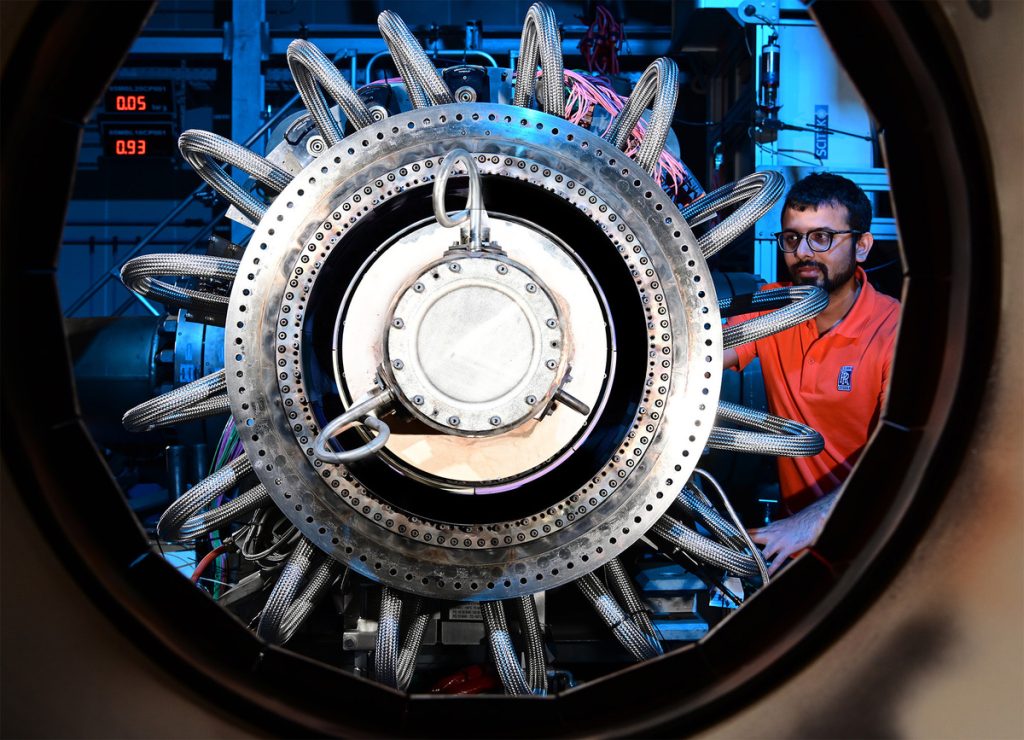
A particularly significant programme involves Rolls-Royce and easyJet, which are working together to demonstrate hydrogen use in modern gas turbine engines. Rolls-Royce has modified a Pearl 15 aero engine to operate on 100% hydrogen, successfully demonstrating operation up to take-off thrust and across a fully simulated flight cycle.
Figure 3: RR Pearl Engine
This work matters because hydrogen behaves very differently from conventional aviation fuels. Introducing hydrogen into commercial aviation will require changes not only to engines, but also to fuel storage and delivery systems, airport infrastructure, operating procedures and safety regulations.
Rolls-Royce has therefore been working with the UK Civil Aviation Authority (CAA) through its Hydrogen Challenge. The initiative brings regulators, industry and academia together to identify the technical and regulatory requirements needed to introduce hydrogen-powered aircraft safely.
According to Rolls-Royce Chief Engineer Adam Newman, the programme has provided the company with important insight into how hydrogen performs in a modern aero gas turbine. He also emphasized the importance of involving regulators early because hydrogen propulsion will require new safety standards that may extend beyond existing aviation regulations.
Hydrogen development is also expanding elsewhere in the aerospace sector. Safran and ZeroAvia have agreed to collaborate on hydrogen-electric propulsion, including advanced high-temperature fuel cells. The UK government is providing additional funding for zero-emission aviation projects, including hydrogen storage and airport infrastructure demonstrations.
Figure 4: Zero-emission hydrogen-fuelled aircraft in flight and its ground-based refuelling station.
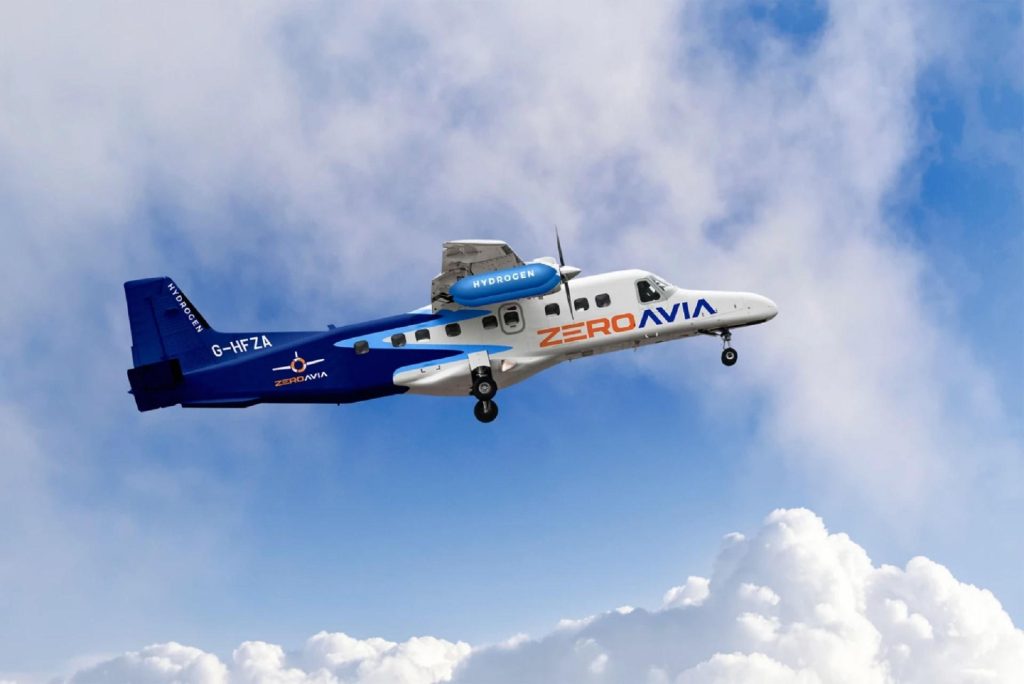
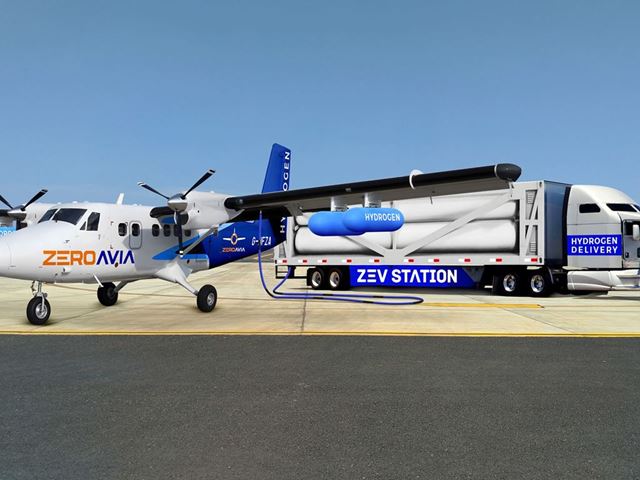
Hydrogen aviation is developing along several technology paths. ZeroAvia is pursuing hydrogen-electric propulsion using fuel cells, while Rolls-Royce is investigating direct hydrogen combustion in gas-turbine engines. Source: ZeroAvia, Rolls-Royce
Together, these initiatives suggest hydrogen aviation is entering a new phase. The challenge is no longer simply proving that hydrogen can power an aircraft engine. The industry must now demonstrate that hydrogen propulsion, storage, airport infrastructure and regulation can be integrated into a safe and commercially practical aviation system.
The Rolls-Royce programme is particularly noteworthy because it applies hydrogen directly to modern gas-turbine technology—potentially providing another pathway toward lower-emission commercial aviation.
Progress with SAF
The Aerospace industry was also very busy at Farnborough, showing off and discussing how SAF could become a commercial fuel that will suit their purposes while also contributing to the Net-Zero plan.
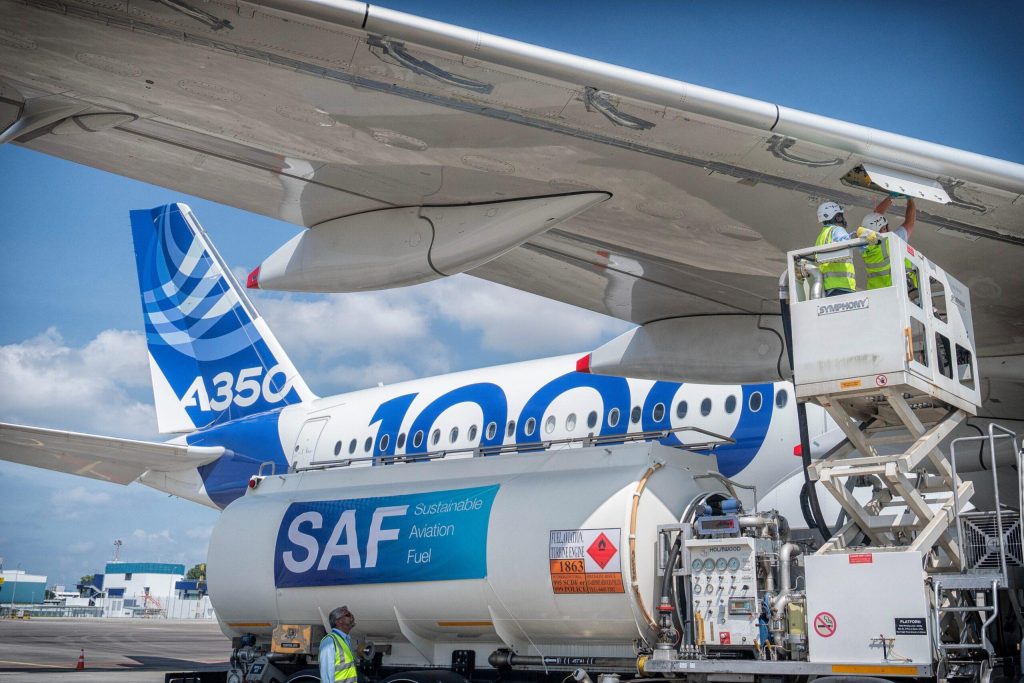
Figure 5: Airbus A350-1000 being refuelled with 35% blend of sustainable aviation fuel (SAF).
Sustainable Aviation Fuel Moves Toward Commercial Scale
Sustainable Aviation Fuel (SAF) is increasingly moving from demonstration projects toward commercial deployment. SAF can be produced from renewable feedstocks such as waste oils, agricultural and forestry residues and other biomass, and can substantially reduce life-cycle greenhouse-gas emissions compared with conventional jet fuel.
Unlike hydrogen or battery-electric propulsion, which will require major technological and infrastructure changes before they can serve much of commercial aviation, SAF can be incorporated into the existing aviation system. This makes it one of the industry’s most important near- and medium-term tools for reducing emissions. The challenge is increasingly one of producing SAF in sufficient quantities and at a competitive price.
United States weighs in: Scaling Up SAF Production
The United States has established an ambitious framework through its Sustainable Aviation Fuel Grand Challenge, targeting domestic production of 3 billion gallons annually by 2030 and 35 billion gallons by 2050. The program also seeks life-cycle greenhouse-gas reductions of at least 50% compared with conventional aviation fuel.
The strategy extends well beyond fuel production. It includes development of new feedstocks, improved conversion technologies, regional supply chains and infrastructure, SAF qualification and increased blending limits. Public policy and production incentives are intended to help narrow the substantial cost difference between SAF and conventional jet fuel.
The immediate U.S. emphasis is on scaling commercially available SAF technologies while developing additional feedstocks and production processes capable of supporting much greater production after 2030. U.S. Department of Energy, the U.S. Department of Transportation, and the U.S. Department of Agriculture, in collaboration with the U.S. Environmental Protection Agency, have partnered to produce “SAF Grand Challenge Roadmap: Flight Plan for Sustainable Aviation Fuel”
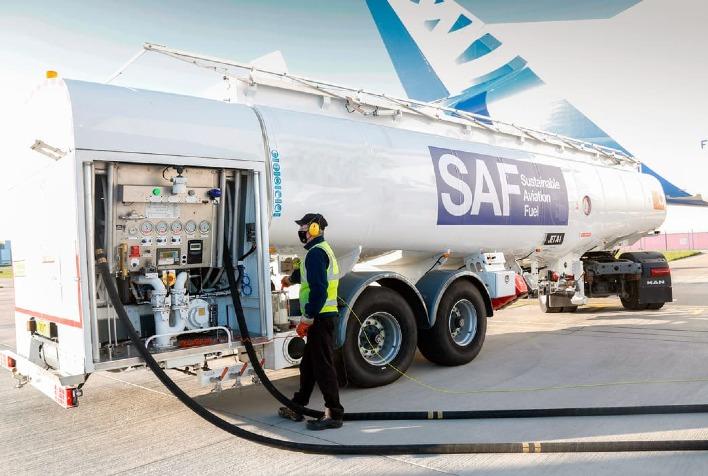
Figure 6: SAF Fuelling truck
Canada: A Significant Industrial Opportunity
Canada is approaching SAF from a somewhat different starting point. The country has considerable feedstock potential, including waste oils, canola, and woody biomass, along with an established aviation sector and capable industrial infrastructure.
The economic opportunity to produce SAF could be substantial for Canada. The analysis summarized in source materials estimates that supplying 40% of Canada’s jet-fuel requirements with SAF by 2040 could generate approximately $32 billion in GDP between 2026 and 2040 while supporting activity across agriculture, construction, manufacturing and services.
The major obstacle remains economics. Canadian SAF is estimated to face a cost disadvantage of approximately $1.15 per litre relative to conventional jet fuel. Existing support programs may therefore be insufficient to stimulate production at the scale required. Potential mechanisms include production incentives, long-term off-take agreements, feedstock support and policies that provide greater market certainty.
There are nevertheless signs of movement. At Farnborough in July 2026, Air Canada and Airbus announced their intention to establish a jointly funded platform of up to C$13.7 million to help advance commercial-scale Canadian SAF production.
For Canada, SAF therefore represents more than an environmental initiative. It could become a new industrial value chain connecting Canadian agriculture, forestry, energy, refining and aerospace.
For a further read on this matter, see Airbus’ Canada Sustainable Aviation Fuel Economic Impact Study
Figure 7: Canada presents a significant opportunity for SAF Production, but Innovation will be needed.

Canada’s Need for Further Focused Innovation
Canada will need further focused agricultural innovation to meet global SAF requirements. Relying too heavily on conventional food crops to produce SAF could quickly bring the food-versus-fuel debate to the fore. As one of the world’s major agricultural exporters, Canada supplies grains and oilseeds to domestic and many international markets.
One opportunity is to develop crops and cropping systems that increase SAF feedstock production without simply diverting existing food production. Double cropping and relay cropping could become part of that approach in suitable regions. Researchers are already examining winter oilseeds such as camelina that can grow alongside, or in sequence with, short-season food crops. Agricultural residues, forestry residues and crops suited to marginal land provide other potential sources of SAF feedstock.
While climate change may alter growing seasons and expand some cropping opportunities, realizing those opportunities will require continued innovation in crop genetics, agronomy, yields and farm-management systems. The objective should not simply be to divert more Canadian agricultural production toward fuel. It should be to increase the sustainable feed stock supply while protecting Canada’s role as a major food producer.
A Transition Already Underway
Farnborough 2026 demonstrated that aviation’s transition toward lower emissions is no longer centred on a single technology or a distant objective. More efficient aircraft are entering service today, SAF is moving toward commercial scale, and hydrogen propulsion is progressing from laboratory research toward practical demonstration. Each pathway faces different technical, economic and infrastructure challenges, and each will develop on a different timeline.
For Canada, the opportunity extends well beyond operating cleaner aircraft. Developing new fuels, agricultural feedstocks, production technologies and supporting infrastructure could connect aviation with Canada’s aerospace, energy, agriculture and forestry sectors. The challenge now is to turn Canada’s considerable resources and technical capabilities into commercially viable solutions. The transition is underway; the opportunity is to ensure that Canada helps build it.